Follow the Science | 5 Minute Video


Channel: PragerU
Uploaded by PragerU on 20210405
Categories: Education
Tags: prageru, prager university, brian keating, astrophysicist, scientific method, knowledge, wisdom, Sir Fred Hoyle, morality, Einstein, Albert Einstein, Richard Feynman, good science, skepticism, Karl Popper, authority, predictive models
Brian Keating is an astrophysicist at a major university. Science is his life. But when he hears someone say to “follow the science,” he gets nervous. Because that’s not how science works. And never has. Follow Brian on social media: https://www.youtube.com/DrBrianKeating?sub_confirmation=1 https://twitter.com/DrBrianKeating ht

In this video, astrophysicist Brian Keating explores the true nature of science, urging viewers to approach claims of "following the science" with healthy skepticism rather than blind acceptance. He argues that science is a process of seeking knowledge, not a set of absolute, unchanging dogmas [00:09], [04:08].

Key Arguments

Science is Provisional: Knowledge is constantly evolving. Keating provides historical examples where consensus shifted, such as the transition from Fred Hoyle’s "steady state" universe t
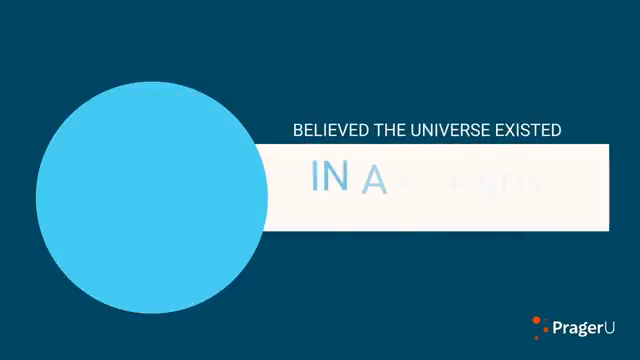
Image for chunk 1

o the Big Bang theory, and the eventual rejection of eugenics, which was once widely supported by prestigious scientific institutions [00:58], [01:10], [01:16].

The Role of Skepticism: Citing Richard Feynman, Keating emphasizes that science relies on questioning experts. A scientific theory must be falsifiable—it must be capable of being proven wrong to be considered valid [02:17], [03:11].

Limitations of Models: He cautions against over-reliance on predictive models, noting that they are limited by the qual

Image for chunk 2

ity of input data and the inherent difficulty of predicting the future [03:30].

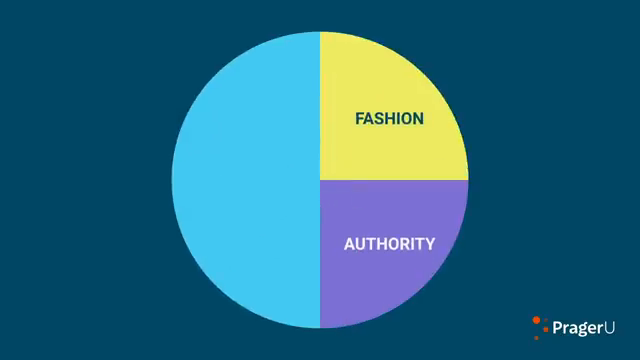
Knowledge vs. Wisdom: Keating distinguishes between scientific knowledge and political or moral judgment. He notes that while science provides knowledge, it does not dictate policy, morality, or wisdom [00:24], [04:31].

The Scientific Method

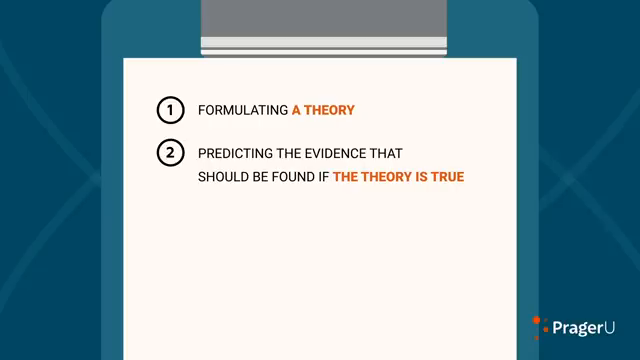
Keating outlines the core process used to pursue scientific knowledge:

Plaintext

+-------------------------------------------------------+

| THE SCIENTIFIC METHOD

Image for chunk 3

|

+-------------------------------------------------------+

| 1. Formulate a theory |

| 2. Predict evidence (that proves the theory) |

| 3. Collect data |

| 4. Analyze data |

| 5. Refine theory & present to experts |

+-------------------------------------------------------+

| Note: If a theory cannot be falsified, it is likely |

| not good science.

Image for chunk 4

|

+-------------------------------------------------------+

Conclusion

The speaker concludes that science is not a political tool or a source of settled authority. Instead, it is an ongoing pursuit of knowledge. He encourages using scientific findings to inform decisions while recognizing that science itself cannot solve every human problem or provide all the answers [04:16], [04:43].

YouTube URL: https://www.youtube.com/watch?v=XCM-QFyzI8U

Follow the Science | 5 Minute Video

PragerU · 1.7M view

Image for chunk 5

Viewer Discussion & Comments

@Western451
If he ever gets fired he should start reading audio books.
@Mason58654
“Every age gets, within certain limits, the science it desires.” - C. S. Lewis
@tpdircks
The most impressive thing about this video is that this guy is a professor at a California University.
@rosalindrussell1020
He managed to get people to really think about this whole Covid nightmare without mentioning it by name.
@NikolaMeduric
Thank you for citing Karl Popper. It seems that a lot of scientist have forgotten about his important contribution, and they have to remember if they want to detect pseudoscience.